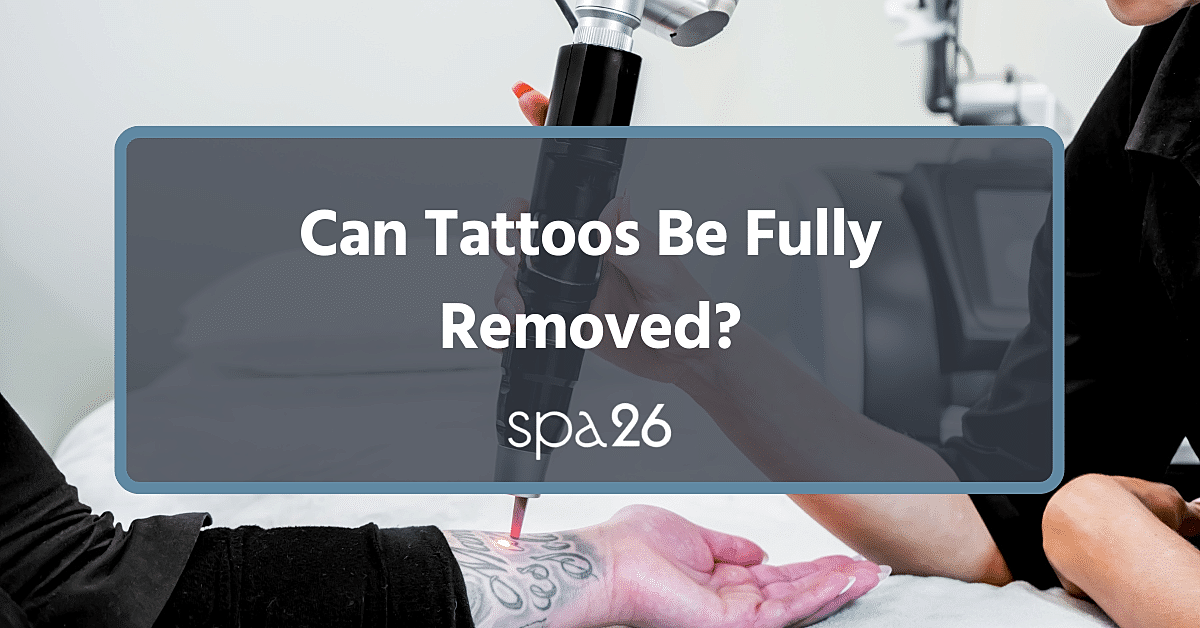
 Can Tattoos Be Fully Removed?
Aug 3, 2025
Tattoos are a form of self-expression, but over time, you may lose interest in them, mostly due to changes in likes and preferences. Now when it comes to tattoo removal, some are skeptical of whether tattoos can be completely removed or not. The reality is tattoos can indeed be removed or, in some cases, faded away with the help of advanced laser technologies.
At Spa26, our approach to tattoo removal is precise, personal, and designed to restore your skin without compromise. With over 30 cutting-edge technologies at our disposal, including PicoSure laser treatments for advanced laser tattoo removal, we provide treatments that suit your skin’s integrity to fade what you no longer need. Contact us today to get started on our services.
This post offers a clear understanding of whether tattoos can be removed or not and will also cover removal methods and what to expect after every treatment.
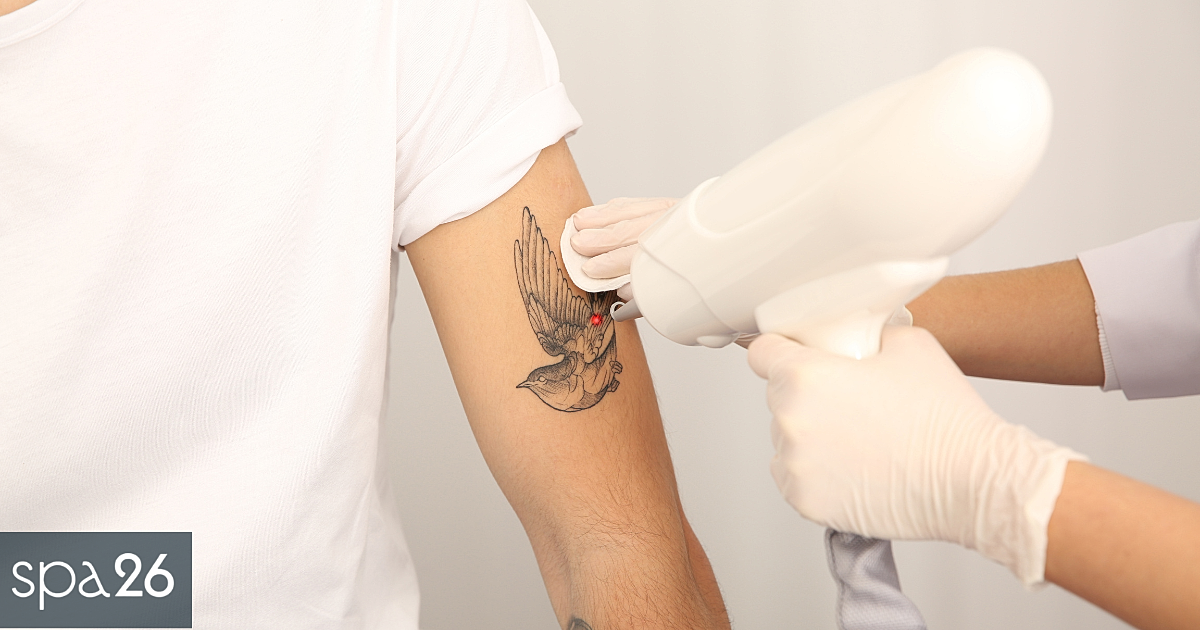
Tattoo removal has come a long way from inception, and there are several methods available. These are:
1. Laser Tattoo Removal
Laser tattoo removal is the most advanced and widely used option today. It uses highly focused laser beams to target ink particles that are embedded deep in the skin, breaking them down so your body’s immune system can gradually flush them out. It is meant to be done by a certified tattoo removal specialist and is a safe and effective method for all skin types regardless of the ink color. It also requires multiple sessions for the best results, especially for darker inks or large tattoos.
2. Surgical Excision
This method involves cutting out the tattooed skin and stitching the area shut. Although it offers immediate results unlike the laser method, surgical excision is more suited for small tattoos.
3. Dermabrasion (Skin Sanding)
This procedure involves mechanically sanding off the top layers of skin to remove the embedded tattoo ink. Dermabrasion is barely recommended these days due to its high risk of skin scarring and skin irritation.
4. Tattoo Removal Creams
These are over-the-counter products that claim to remove tattoos from home. Since they can’t reach the deep layers of the skin where tattoo ink resides, they do not work as the products claim. So basically, they are ineffective and not recommended by professionals.
5. Emerging Technologies
There are new advances in laser removal, such as PicoSure lasers and Q-switched lasers. These break down ink particles faster and more efficiently and require fewer treatments compared to traditional laser tattoo removal treatments.
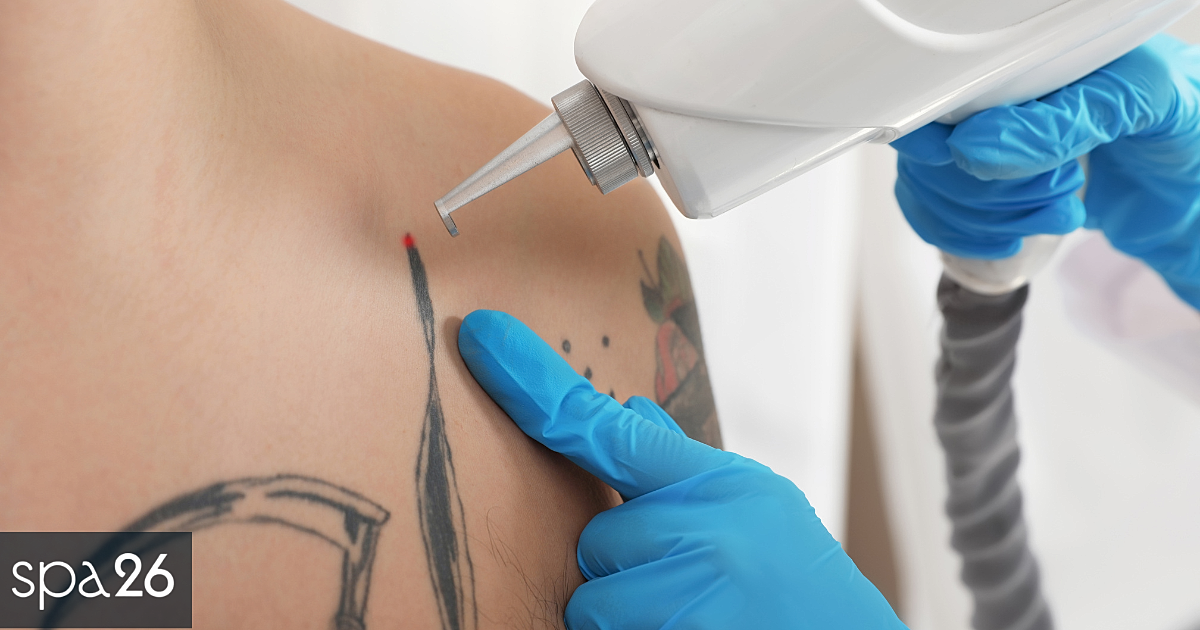
Laser tattoo removal is a procedure that uses concentrated beams of light to break down tattoo ink trapped beneath the surface of the skin. These lasers target specific ink particles without damaging surrounding tissues. Therefore, it is a safe and effective process, especially when performed by a qualified specialist.
When the tattoo ink is broken down by the lasers, the ink particles are gradually cleared away by the body’s immune system. This process unfolds over time and requires multiple sessions for optimal results. The number of sessions depends on several factors, including the tattoo size, ink color, age of the tattoo, and skin type.
The types of lasers that perform this procedure vary depending on how they perform on specific colors. For example, Q-switched lasers are best suited for dark inks like black and navy. Whereas advanced picosecond lasers work better at tackling pigments like red, yellow, and green.
Regardless of which laser you choose to use, always remember that total removal of a tattoo is not always guaranteed. Results vary depending on the tattoo’s characteristics and how your skin responds to the laser removal process.
The short answer to this is yes, tattoos can be fully removed. However, there are some conditions you should be fully aware of before attempting to have your tattoo removed. With the advancement of laser tattoo removal technology, many tattoos can be completely removed. But “completely removed” means different things to different people. To some, it means the total elimination of visible ink. To others, it’s about achieving significant fading that makes the tattoo barely noticeable.
However, complete clearance of a tattoo is never guaranteed. Some tattoos may leave behind ghost images, discoloration, or slight changes in skin texture. Others can be nearly or completely removed with minimal scarring. Factors such as skin type, tattoo depth, and how your body’s immune system responds to the laser removal process all play a role in the final result.
That’s why it’s important to consult with a qualified specialist who can assess your tattoo and provide realistic expectations. A trusted tattoo removal specialist will guide you through the right approach and help determine whether complete tattoo removal is possible for your unique case.
Having a tattoo completely removed or significantly faded depends on a range of professional and technical factors. It is therefore important to keep these factors in mind to set realistic expectations for the outcome of the procedure.
1. Tattoo Size and Location
Larger tattoos usually take longer to treat and they sometimes require more sessions for complete removal. The location also matters, as tattoos on areas with better blood circulation (chest or back) respond better than those on hands, feet, or ankles.
2. Ink Colors Used
Tattoos in dark inks like black and navy respond well to laser removal. Whereas, brighter shades like green, yellow, and red are more resistant. This is where knowing and choosing the right laser treatment to use comes into play.
3. Age of the Tattoo
Over time, the body’s immune system gradually breaks down some of the tattoo ink without the help of a laser. Due to this, older tattoos fade faster and easier compared to newer ones.
4. Skin Type and Color
Your skin type and color also play a critical role in how your skin reacts to laser tattoo removal. While treatments are effective across a range of skin tones, those with darker skin may require more careful attention during treatment. Putting this into consideration, laser calibration prevents the skin from irritation, hypopigmentation, or hyperpigmentation.
5. Quality of the Original Tattoo
If the tattoo was done professionally, where the ink used was more concentrated and went deep into the skin, it would be more challenging to remove. On the other hand, if it is an amateur tattoo that was done with less precision, it may respond quickly to the tattoo removal process.
The complete tattoo removal process usually begins with a consultation with a qualified tattoo removal specialist. During the consultation, the specialist will assess the tattoo size, location, ink colors, and how old the tattoo is. They also consider your skin type, medical background, and lifestyle to know how well your immune system may respond to laser treatment. This stage is when you’ll also learn how many sessions are required and whether complete removal or significant fading is are realistic goal based on your tattoo and skin type.
The next stage is for your specialist to share detailed pre-treatment instructions. Here, you will be advised to avoid sun exposure on the area for at least two weeks, as UV rays can increase the risk of skin irritation during treatment. You may also be encouraged to stay hydrated and maintain good blood circulation so your body can easily break down ink particles. Additionally, you may be instructed to avoid taking aspirin and other blood thinners, stop applying creams or makeup to the tattooed area, and shave the spot if necessary. These precautions reduce complications and make the laser removal process safer and more effective.
Finally, setting realistic expectations for tattoo removal is very important. Not all tattoos can be completely removed, and some may only leave faint “ghost” images or slight discoloration.
Laser tattoo removal, like any other medical procedure, carries potential risks and side effects. One of the most common side effects is skin irritation in the form of redness, swelling, or blistering. This reaction is typically a sign of the body healing and is short-lived. However, if the skin is not properly taken care of, it may result in scarring.
Another possible side effect is a temporary change in skin tone, also known as hypopigmentation or hyperpigmentation. Hypopigmentation is light patches on the skin, while hyperpigmentation is the darkening of the skin. Although these effects take months to fade, it is a guarantee that they will fade away.
Finally, there is a risk of your skin getting infected, especially when you don’t follow proper aftercare procedures. You have to take measures like caring for your skin, keeping the treated area clean, avoiding itching, and applying prescribed creams and ointments. Doing these not only prevents infections, but they also speed up the healing process.
The tattoo removal method you choose also affects the risks and side effects you could face. If you’re going for a high-quality removal method, like lasers, they require more sessions for optimal results. This is more expensive than opting for cheaper methods such as tattoo removal creams. But in the long run, the side effects of the cheaper method could be more severe than those of the costly ones.

For laser tattoo removal, the cost usually falls between $100-$500 per session. Keep in mind that this is just an estimate, and your actual price will be determined by the tattoo’s complexity and the number of sessions required. To get the exact cost of tattoo removal may be difficult due to several factors that may influence the cost. One of these factors is the size of the tattoo. This is because larger tattoos take more time and resources to remove than smaller ones.
Another factor is the ink colors used. Lighter or multicolored tattoos need more laser treatment compared to darker ones, so you will need to attend more sessions, which are more expensive. And finally, tattoos located in areas where there is less blood circulation or on a darker skin tone are more difficult to remove, which will also affect the price.
However, removing a tattoo doesn’t have to be so expensive, as there are ways to reduce the cost and still have your tattoo removed effectively. First, you can look for tattoo removal specialists that offer discounts or package deals. You can also consider partial removal if you’re only planning to cover up your tattoo. And finally, avoid cheap tattoo removal creams because they are rarely effective and may cause severe side effects.
Taking care of your skin after laser tattoo removal is a very important stage in the tattoo removal process. Begin this stage by gently cleansing the treated area with mild soap and lukewarm water. Then, pat dry and apply recommended ointments to keep the area moisturized and shielded from bacteria. Also avoid picking on scabs or popping blisters, as this can delay the healing process and lead to permanent scars.
Another aftercare measure is avoidance of sun exposure. Sunlight is bound to cause pigmentation issues like hypopigmentation or hyperpigmentation, especially in individuals with darker skin tones. Therefore, the area must be kept covered, or apply SPF sunscreen to protect your skin from exposure.
Furthermore, in case of pains or discomfort, you can use over-the-counter medications or cold compresses for relief. Although, if you experience unusual symptoms or signs of infection, it is advised you contact your tattoo removal specialist and be sure everything is fine.
In conclusion, following the right aftercare instructions not only helps prevent skin irritation, scarring, or infection, but it also plays a key role in achieving smoother results throughout your tattoo removal process.
These days, several DIY tips are claiming to remove a tattoo at home. Examples include salt scrubs, lemon juice, or tattoo removal creams. But the reality is that these methods are ineffective and potentially harmful. This is because these methods rarely penetrate deep enough to reach the tattoo ink particles in the skin.
These home methods can also lead to skin irritation, allergic reactions, or even scarring. However, if you want a safe procedure with lasting results, laser tattoo removal performed by a qualified tattoo removal specialist is the best option.Ready to Say Goodbye to Your Tattoo?
Modern laser tattoo removal is considered the safest and most effective. However, results may vary based on your tattoo’s size, ink color, location, and your skin type. It is important to take these factors into consideration, consult a certified tattoo removal specialist, and also follow through with the aftercare procedures to ensure the best results.
Want to remove a tattoo? Spa26 offers advanced laser tattoo removal treatments that are FDA approved and tailored to your skin and ink type. You can visit our Beverly Hills office or book a consultation today to get started on your journey to complete tattoo removal.
This section covers answers to some of the most common questions about tattoo removal.
Most tattoo colors can be removed, but bright shades like red, yellow, or green require more laser treatment sessions to fully clear.
The laser tattoo removal process can be uncomfortable, but numbing creams and local anesthetics can reduce discomfort during the procedure.
No, tattoo removal is considered a cosmetic procedure and is not covered by most health insurance brands. But you can confirm with your provider to know what your insurance plan covers.
Individuals with health issues, certain skin conditions, or pregnancy should avoid tattoo removal. Your tattoo removal specialist can also assess you to confirm that you are qualified for a session.
Complete tattoo removal requires multiple sessions that could span across several weeks. The size, ink color, or quality of the tattoo also determines how long the tattoo removal process will take.
Laser tattoo removal does not leave scars when performed by trained professionals with the right equipment. Other methods like dermabrasion and excision could potentially leave scars.
Once the treated skin is fully healed, you can get a new tattoo.




Sheila Nazarian is the founder and operator of Spa26. Dr. Nazarian’s Spa26 patients benefit from her numerous qualifications. She has years of training and expertise as a board-certified plastic surgeon. She graduated from Columbia University, where she concentrated in pre-med. She studied medicine and earned her doctor of medicine degree at Albert Einstein College of Medicine at Yeshiva University.

Spa26 offers luxury skincare, anti-aging treatments, and wellness services. Consult with our experienced team at (310) 683-7537.