Published
12 minute read
Jul 21, 2025
Tattoo removal has become increasingly popular as more people choose to eliminate unwanted or outdated ink for personal or professional reasons. One of the most trusted and widely used methods is laser tattoo removal, using targeted pulses of light to break down ink particles in the skin. After undergoing this treatment, the fragmented particles are gradually and naturally eliminated by the body, offering a precise and minimally invasive solution.
The number of laser sessions required for significant tattoo removal typically ranges from 5 to 10, depending on factors such as the tattoo’s size, ink color, depth, age, and the individual’s skin type.
Thinking about removing an unwanted tattoo? At Spa26, our certified laser specialists use advanced technology to safely and effectively break down tattoo ink and provide personalized treatment plans that are tailored to your skin and tattoo type. With years of experience and a focus on natural skin restoration, we’re committed to helping you achieve smooth, radiant results. Contact us today and schedule a tattoo removal treatment in Beverly Hills.
In this post, we’ll break down how many laser sessions it usually takes to remove a tattoo and the key factors that influence the treatment timeline.
Tattoo removal has become increasingly popular as more people choose to eliminate unwanted or outdated ink for personal or professional reasons. One of the most trusted and widely used methods is laser tattoo removal, using targeted pulses of light to break down ink particles in the skin. After undergoing this treatment, the fragmented particles are gradually and naturally eliminated by the body, offering a precise and minimally invasive solution.
The number of laser sessions required for significant tattoo removal typically ranges from 5 to 10, depending on factors such as the tattoo’s size, ink color, depth, age, and the individual’s skin type.
Thinking about removing an unwanted tattoo? At Spa26, our certified laser specialists use advanced technology to safely and effectively break down tattoo ink and provide personalized treatment plans that are tailored to your skin and tattoo type. With years of experience and a focus on natural skin restoration, we’re committed to helping you achieve smooth, radiant results. Contact us today and schedule a tattoo removal treatment in Beverly Hills.
In this post, we’ll break down how many laser sessions it usually takes to remove a tattoo and the key factors that influence the treatment timeline.
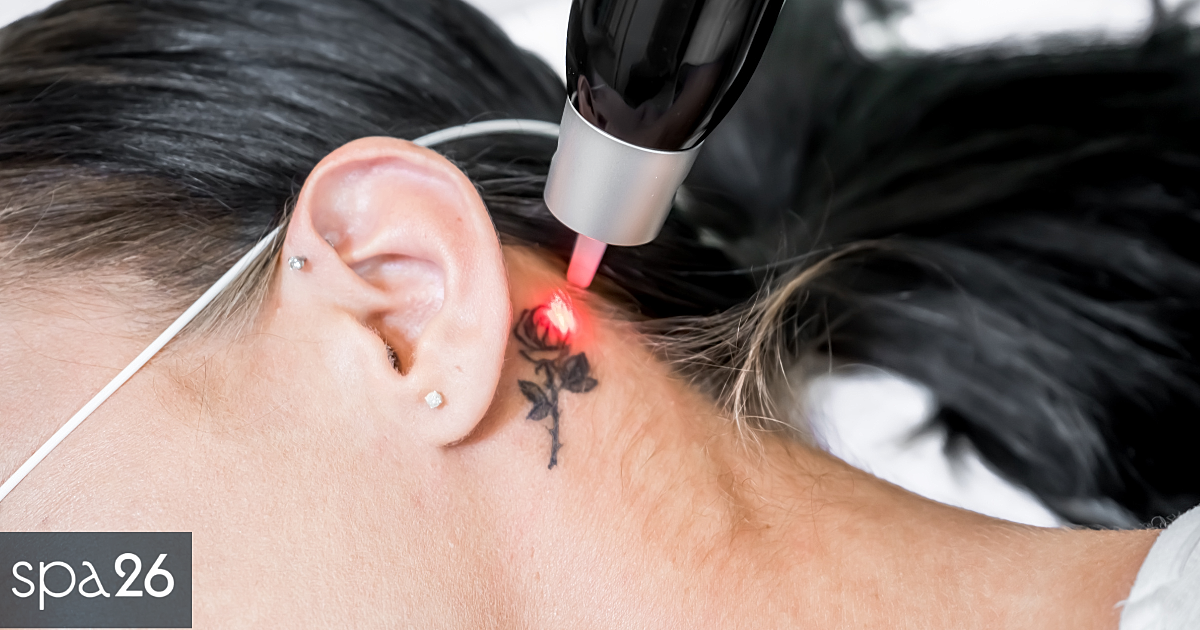
Laser tattoo removal is a non-invasive procedure that uses advanced laser technology to break down tattoo ink so that the body can naturally eliminate it afterward. During this procedure, lasers deliver short, high-intensity pulses of energy that shatter ink particles beneath the skin without damaging surrounding tissue. Once broken down, the ink is gradually flushed out by the immune system. This leads to fading and eventual removal of the tattoo.
There are various types of lasers used in tattoo removal, with Q-switched lasers being one of the most commonly used for darker ink colors such as black and blue. In comparison, PicoSure laser and other picosecond lasers offer faster laser energy delivery and may be more effective on stubbornor colorful tattoos, and they often require fewer sessions.
Additionally, laser tattoo removal is FDA-approved and generally safe when performed by atrained professional, such as a dermatologist or certified laser technician. While side effects like redness, swelling, or temporary scabbing are common, serious complications are rare. With proper care and a personalized treatment plan, laser tattoo removal offers a reliable and effective solution for fading or fully removing unwanted tattoos.
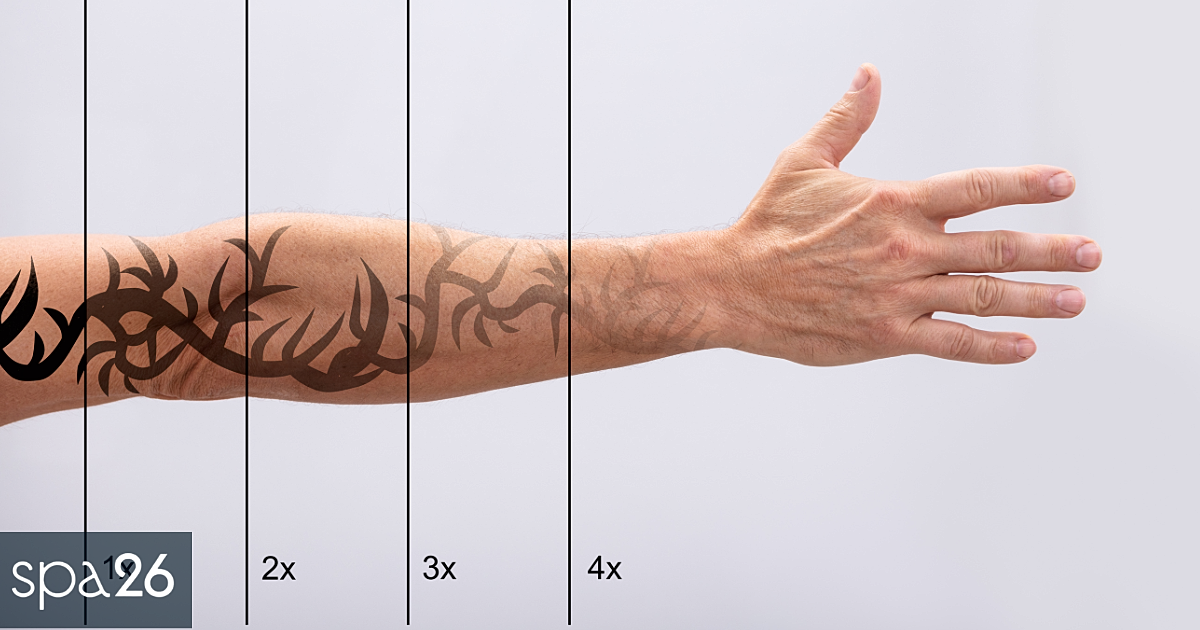
Most tattoos require 5 to 10 laser removal sessions for noticeable fading or complete removal. However, the exact number of sessions needed to remove a tattoo can vary depending on factors such as the tattoo’s size, ink color, depth, age, and your skin type. In general, dark, older tattoos tend to fade faster and require fewer sessions, while newer or colorful tattoos often require additional sessions.
Removing tattoos is a gradual process, so patience is key. The body’s immune system needs time to recover between sessions. The recommended time is usually 6 to 8 weeks to break down and flush out the fragmented ink particles. Therefore, sticking to your treatment schedule and following aftercare instructions will help maximize results with fewer complications.
Laser tattoo removal is the most common and preferred method of tattoo removal as it uses targeted light energy to break down ink particles so the body can naturally eliminate them. This method typically requires 5 to 10 sessions and offers gradual fading with minimal scarring when done properly.
Another method is surgical excision, which involves cutting out the tattooed skin and stitching the area closed. It usually requires only one session; however, it’s best suited for small tattoos and could leave a scar. Like surgical excision, dermabrasion, and chemical peels work by removing layers of skin and therefore also require multiple treatments. However, compared to laser methods, chemical peels and dermabrasion cause more discomfort and require longer downtime.
When comparing these methods, we can note that, despite taking more time, laser removal is perhaps the safest option as it balances effectiveness and skin preservation. Surgical excision is faster but more invasive, while dermabrasion and chemical peels are less precise and riskier in terms of healing. The right method depends on your tattoo, skin type, and desired outcome. It’s best to schedule a consultation with a qualified specialist to determine the most effective treatment plan for you.
The size and placement of a tattoo can significantly influence the number of sessions required for its complete removal. Larger tattoos naturally require more treatments to fully break down the ink. The location also matters; tattoos on the arms or legs may fade more slowly due to lower blood flow, while those on the upper body or face (such as eyebrow tattoos) may respond faster.
Ink color is another major factor. Black and dark blue pigments are the easiest to remove because they absorb laser energy well, while green, yellow, and red are more resistant and normally require more sessions. Multicolored tattoos mostly require different laser wavelengths and a longer treatment regimen.
The age of the tattoo also affects the tattoo removal time. Older tattoos tend to respond better because the ink has already begun to break down over time. In contrast, newer tattoos often contain more vibrant ink and sit deeper in the skin, making them tougher to fade quickly.
Additionally, your skin type and ink depth impact results as well. People with lighter skin tones (Fitzpatrick I–III) usually tolerate stronger laser settings, while darker skin tones (Fitzpatrick IV–VI) require gentler treatment and longer spacing between sessions. Furthermore, professional tattoos often have deeper and denser ink than amateur tattoos, and this leads to more laser treatment sessions. Also, your immune system, health, and aftercare habits all influence how quickly your body clears out the ink after every treatment.
Tattoo removal procedures are normally spaced 6 to 8 weeks apart to give your skin time to recover and allow your body to flush out the broken-down ink particles. Starting from your first session, your provider will clean the surrounding skin and apply a cooling method or numbing agent. After that, a laser is used to target the ink molecules and break them into smaller particles.
You may feel a stinging or snapping sensation during the laser removal treatment that is similar to the sharp snap of a rubber band being quickly released against the skin. Most patients tolerate it well, especially when provided with cooling or numbing options. After each session, you may likely experience temporary side effects such as redness, swelling, blistering, or mild scabbing. These are normal occurrences during the healing process and will usually pass after a week or two. It is important to follow aftercare instructions closely to minimize any discomfort.
One of the clearest signs that your tattoo is ready for the next laser session is when there is noticeable fading of the ink. This means your body has begun flushing out the broken-down pigment from the last treatment. If you also see reduced swelling, scabbing, or redness in the lasered area, it indicates the skin is healing properly.
Before scheduling your next procedure, it’s important to make sure that your skin is fully healed, which should take 6 to 8 weeks. A professional technician will evaluate the treatment area to check for signs of recovery and confirm if it’s safe to proceed. Rushing into the next session too soon can lead to complications or delay progress.

To get the best results from your tattoo removal treatment, you need to follow your aftercare instructions carefully. This includes keeping the treated area clean and dry, avoiding picking or scratching, and applying the ointments recommended to you to support your healing. Proper aftercare helps in preventing complications like scarring or infection, which can slow the fading process and increase the number of sessions required.
Avoiding sun exposure is also vital because UV rays can cause skin irritation, hyperpigmentation, or delay the healing between sessions. Wearing loose clothing over the treated area and using a broad-spectrum sunscreen (SPF 30 or higher) will protect your skin and allow the laser light to work more effectively during each treatment.
In addition, maintaining healthy skin and open communication with your technician can make a big difference. Staying hydrated and eating well will contribute to a better immune function, which helps your body flush out broken-down, smaller particles of ink more efficiently. Let your provider know about any changes in your skin or concerns so that they can adjust the settings and timing of the laser to give you the safest and fastest path to the complete removal of your tattoo.
The average cost of laser tattoo removal ranges from $200 to $1000 per session. Lighter or smaller tattoos usually cost less, while the removal of larger, more intricate designs costs more. Most tattoos require between 5 to 12 sessions, and this brings the total rough estimated cost to between $1,000 and $10,000 or more. Consulting with your provider will help determine a more accurate price based on factors like tattoo size, ink density, ink colour, depth, and your type of skin.
Thus, we can confirm that various factors can influence the price for the complete removal of a tattoo.For example, using advanced equipment like Pico lasers is more effective and can sometimes be more expensive than older equipment. However, they may reduce the number of sessions that are needed to remove a tattoo completely.
The number of sessions needed for tattoo removal depends on several personal and tattoo-specific factors, including the ink color, depth, size of the tattoo, skin type, and the type of laser used. While most tattoos require 5 to 12 sessions, some may need more or fewer depending on how your body responds to treatment.
With patience, consistency, and proper aftercare, safe and effective tattoo removal is achievable. Trust the process and work with a skilled professional to get the best results over time.
Want to remove an unwanted tattoo? At Spa26, our expert team uses FDA-approved laser technology for safe, effective tattoo removal in Beverly Hills. Contact us today and take the first step toward clear, ink-free skin.
No, most tattoos cannot be removed in a single session because multiple treatments are needed to break down the ink gradually and safely.
Completely removing a tattoo usually takes 5 to 12 laser sessions, though the exact number can vary based on the tattoo’s size, color, age, and depth.
Many tattoos can be almost completely removed, but 100% removal isn’t always guaranteed, especially for tattoos with bright colors or deep ink.
Some tattoos take longer to remove due to factors like ink color, depth, size, location, the type of skin, and the type of laser technology used.
Yes, laser tattoo removal is generally safe when performed by a trained professional using FDA-approved equipment, though temporary side effects like redness or swelling can occur.
Most tattoo colors can be removed, but darker inks like black and blue respond best, while lighter colors like yellow, green, and teal may require more sessions or be harder to fully eliminate.
Yes, tattoo removal can hurt and can cause some discomfort. It is usually manageable and often reduced with numbing methods to make the process more tolerable.
Found Contact CTA Found Dr Feature here Found Topic Feature